
I know I talked about employee engagement not that long ago, but I have new information to share that’s timely and important.
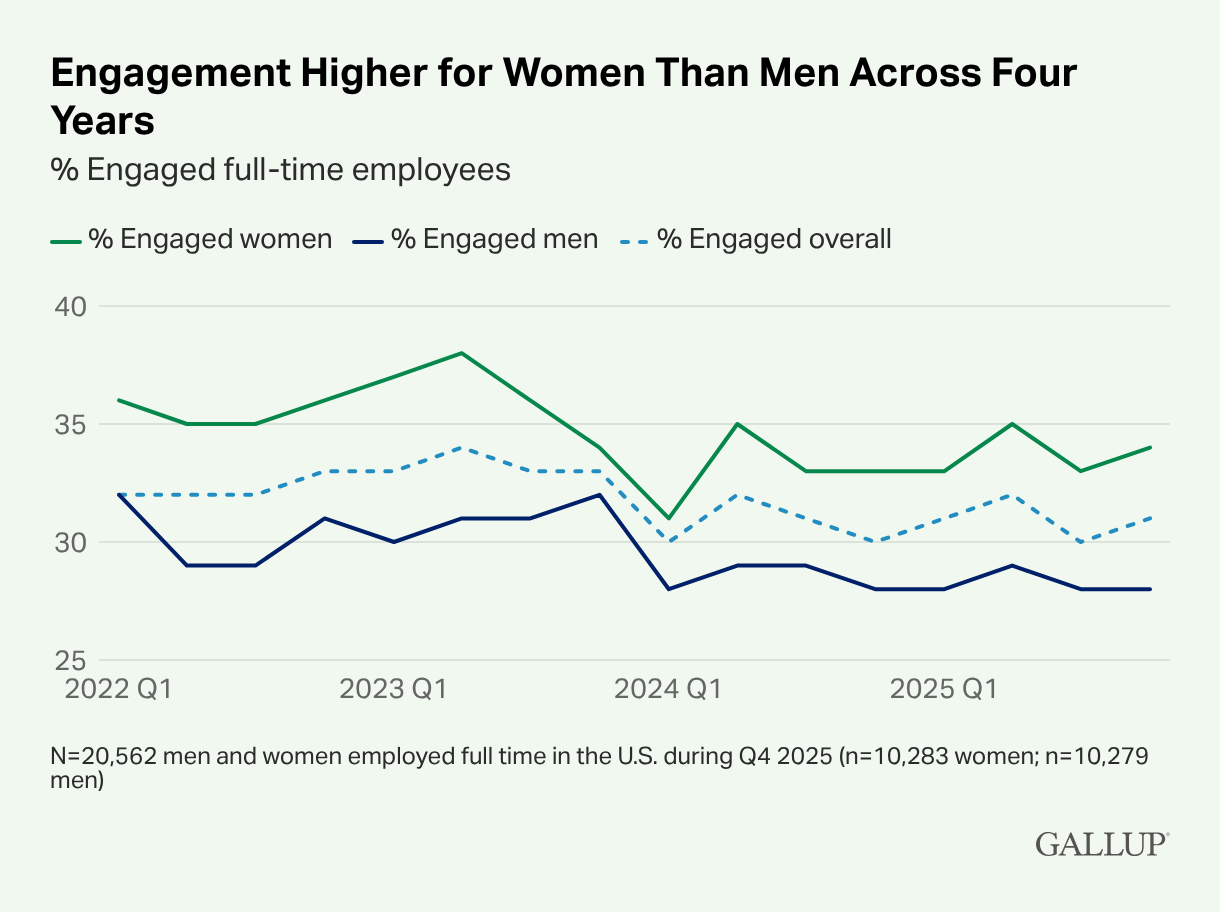 The Gallup organization recently stated that women are more engaged than men on average by several points. Considering that engagement is hovering around the low 30s on average in the US, a multi-point difference is statistically significant.
It gets more interesting though. Women have been more engaged than men for four years running. It’s not an anomaly to write off, but rather something to think more deeply about.
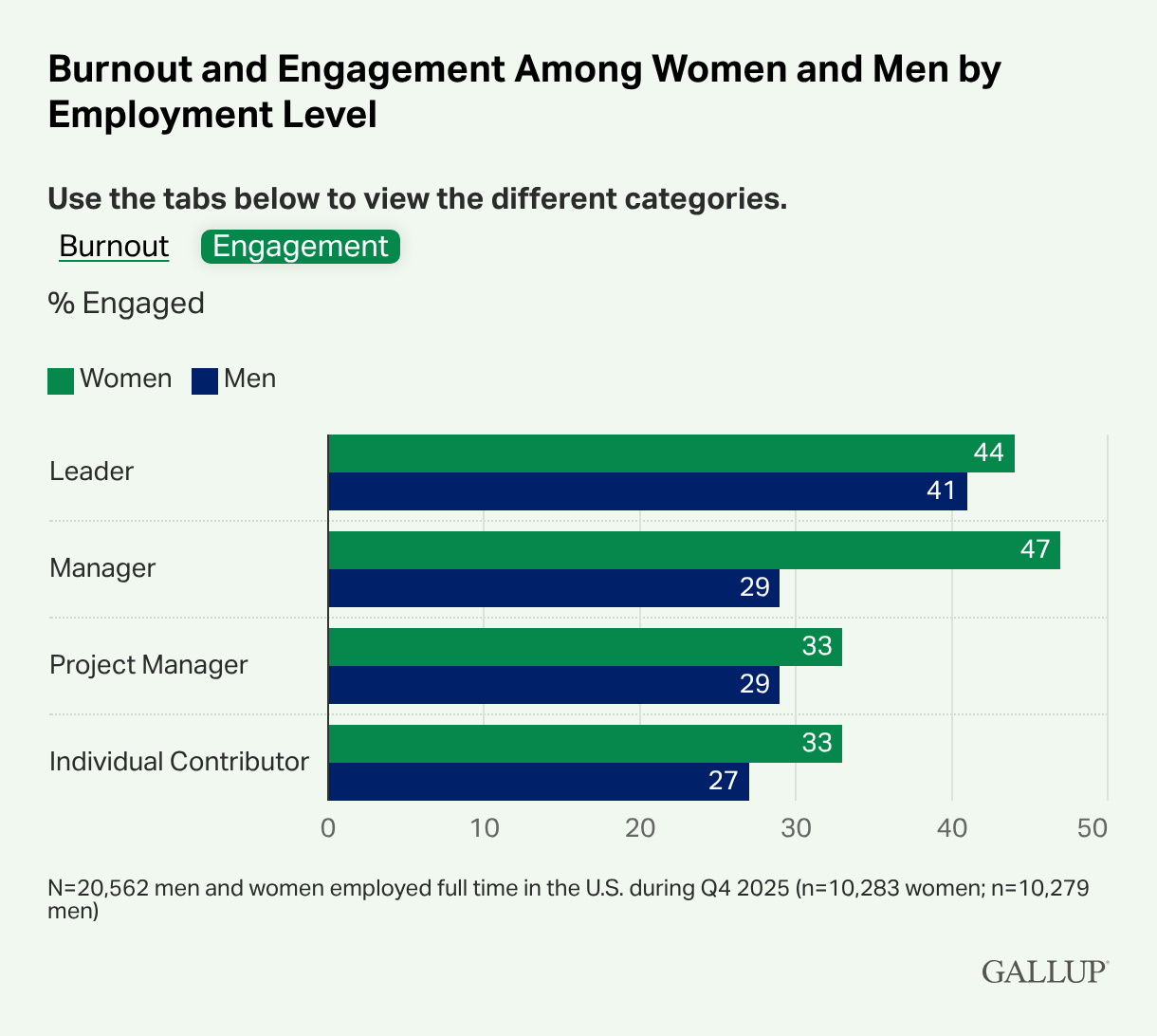
Another interesting point is that managers who are women are as much as 18 points more engaged than their male counterparts. That is by far the biggest gap and is astounding.
Why are women more engaged than men?
It’s not clear. But there is data on what women strongly agree to in engagement surveys:
- Someone encourages their development
- They have the opportunity to do what they do best every day
- The mission or purpose of the organization makes them feel their job is important
- They have a best friend at work
Treat the above as something of a checklist to honor and enable, for not just the women, but also the men in your workforce.
Now, you might pull from this data that you should hire more women across the board and especially for manager roles, but there’s a “watch out” here to be aware of too.
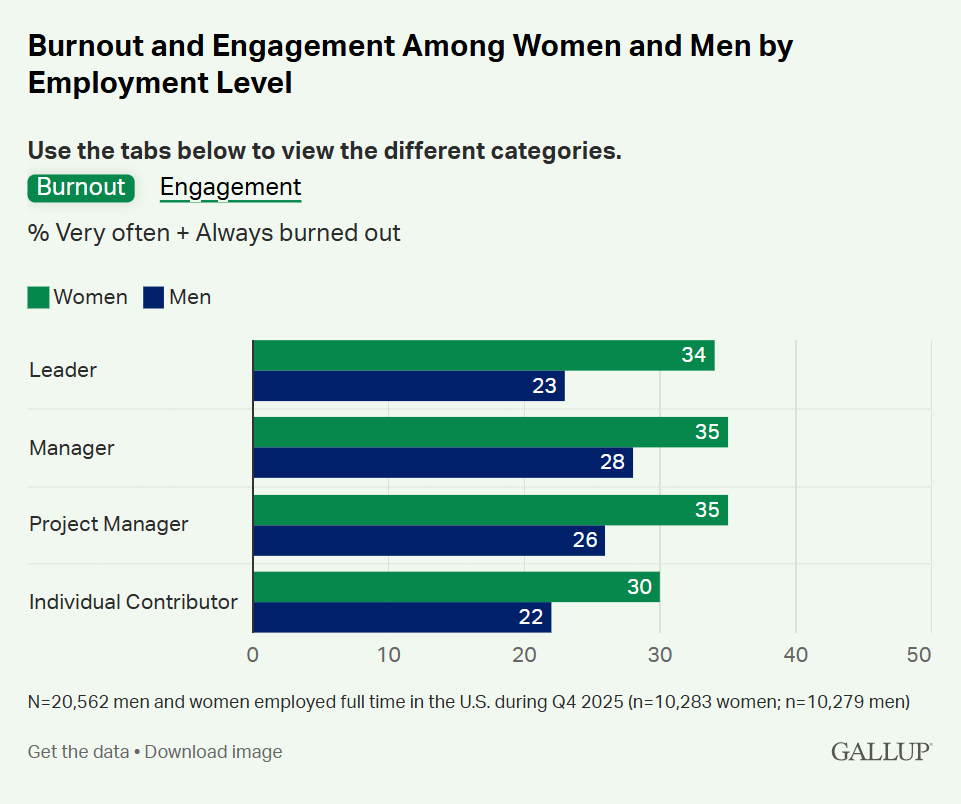 Women are also more likely than men to always or very often experience burnout at work. And that margin is 8 points. Again, it’s statistically significant. Is this paradoxical or not? Women on average are more or far more engaged but also experience burnout at higher levels.
Could some women be too engaged? Do they work even harder than their male counterparts to prove themselves and be seen as worthy of promotion?
This is data that should be explored and examined within your own company. Don’t assume women are experiencing burnout somewhere else. If you currently use engagement surveys and pulse checks, look for differences between genders on these points. If you don’t, consider doing so. We offer tools to support you if you’d like to engage with us for support.
The charts and data points stated in this article are from the Gallup organization and were shared in this article.
Employee engagement does not need to be elusive. You can raise it with a plan and consistent execution. We offer a variety of programs that may benefit your teams. If you would like help to create a plan, measure engagement at your organization, or to support the execution of steps in your plan, contact us to have a no-obligation exploratory conversation.
Get our monthly newsletter to receive relevant articles, resources and news. Instantly receive a guide on “Tips for Making Big Decisions with More Confidence!” when you subscribe.
Here are more resources related to this article:
Articles
- 3 Ways to Raise Employee Engagement
- Building a Best Place to Work: Install Anonymous Employee Survey Software
- Eight Powerful Benefits of Emotional Intelligence in the Workplace
- A Proven Way to Raise Employee Engagement
- RAISED: 6 Ways to Raise Employee Engagement
Case Study
Guide
YouTube Videos
- One Simple Way to Raise Employee Engagement
- 6 Steps to Raise Employee Engagement for Good!
- What Holds Women Leaders Back? Interview with Vicky Regan
- Why Organizations Need to Support the Advancement of Women into Leadership Positions
Featured photo is from ©Kampus Production via Pexels.