
Trust in leadership is a topic I’ve been interested in for years. Leaders must have the trust of their teams and employees, or they’re sunk. It’s as simple as that.
Two recent statistics have caused me to believe it’s time for leaders to have a renewed focus on strengthening trust. Let’s look at them one by one.
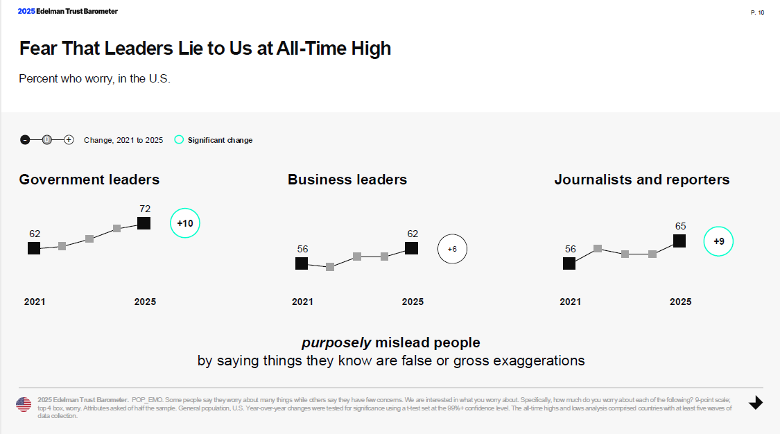
This chart is from the Edelman Trust Barometer study for 2025. They analyze trust in various organizations around the world year after year. They believe, as I do, that trust is the bedrock that supports faith in institutions.
The uptick in the number of people (in the US) who believe that business leaders purposely mislead people by saying things they know are false or gross exaggerations is alarming. It’s way above 50%.
Here’s the next statistic.
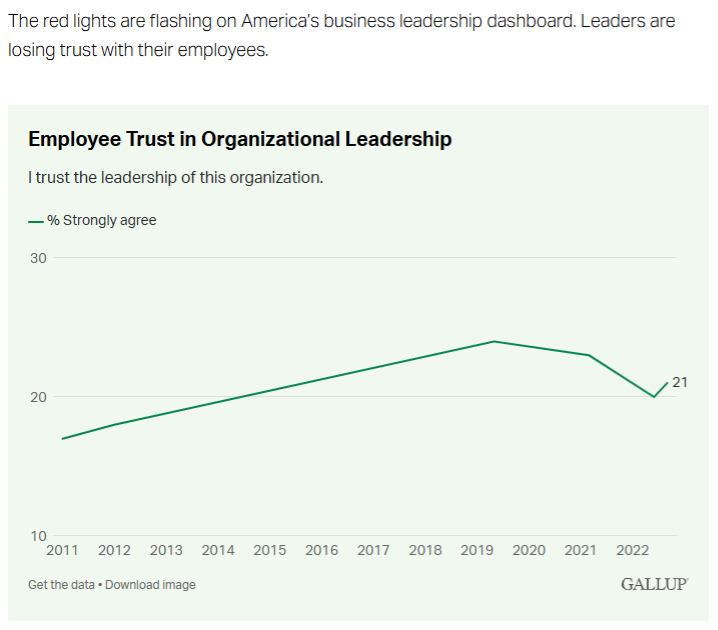
According to recent Gallup data, only 21% of those surveyed strongly agreed that they trust the leadership in their organization. 21%! This is as alarming as the Edelman stat and I can’t help but see a connection between the two. If I think my leaders don’t tell the truth, then I don’t trust them.
It would be folly to believe that these statistics would hardly be true in your organization. This is a cross-section of the population. There are going to be people in your organization who feel as those represented in the survey data.
Where leaders go astray is in assuming they are completely trusted and don’t need to spend time and effort on building and strengthening trust. Even if you’re right, spending more time on trust will only reap dividends. There is no downside to strengthening trust in your leadership.
What you will gain is increased loyalty and discretionary effort.
My favorite resource for learning about trust is the book, The Speed of Trust by Stephen M. R. Covey. This book is a comprehensive resource for anyone to build and strengthen trust. There are so many ideas and best practices within that you could work on implementing them for years. Also within the book is a self-assessment you can take. On Amazon the book is priced at less than $9.00 for the paperback. You can also get an audio version.
The time is now to stand up and take notice of these troubling statistics and do something about it in your organization. I have three suggestions to offer to get started.
One: start paying more attention to communicating your intent. Don’t assume your positive intent is clear. State it. This will prevent a misunderstanding of your intent especially in conversations that are sensitive.
Two: be as transparent as possible. People trust leaders who are open with them. Don’t believe they can’t handle the truth. If you’re open with them, they’ll be open with you and that will make you much more informed about what’s really going on at lower levels of the organization.
Three: work to increase your emotional intelligence. Two core aspects of EI are self-awareness and awareness of others. Having a handle on these can strengthen trust since you’ll be aligned with how others see you and able to adjust as necessary and you’ll not overlook when others need further support and care.
I hope this snapshot of where we are on trust in leadership helps bring into focus one area you might spend more time on in the months ahead.
Check out our emotional intelligence classes or contact us to learn more.
Get our monthly newsletter to receive relevant articles, resources and news. Instantly receive a guide on “Tips for Making Big Decisions with More Confidence!” when you subscribe.
Here are more resources related to leadership:
Articles:
- How Team Leadership Training Helps Leaders Achieve Their Goals
- Best Practices for Creating an Effective Leadership Training Program at your Company
- Key Responsibilities and Skills Required for a New Executive Leadership Role
- From Manager to Leader: Executive Coaching for Leadership Development
- Empowering Your Leadership Through Executive Coaching Services
- Self-Awareness: A Foundation of Leadership Success
- Preparing for Advancement or Success in a New Leadership Role
Case Studies:
- Executive Coaching Helps a Young Leader Garner the Respect and Loyalty of Her Veteran Team
- Guiding a Leader To Employ Emotional Intelligence at Work
Ebook:
Videos:
- Leadership Training Series YouTube Playlist
- Elevate Your Leadership – The Art of Being Fully Present in Meetings
- TOP 10 Characteristics of a Leader With Executive Presence PART 1
- Top 10 Characteristics of a Leader With Executive Presence PART 2
Photo copyright: Featured photo is from ©Yan Krukau via Pexels.